
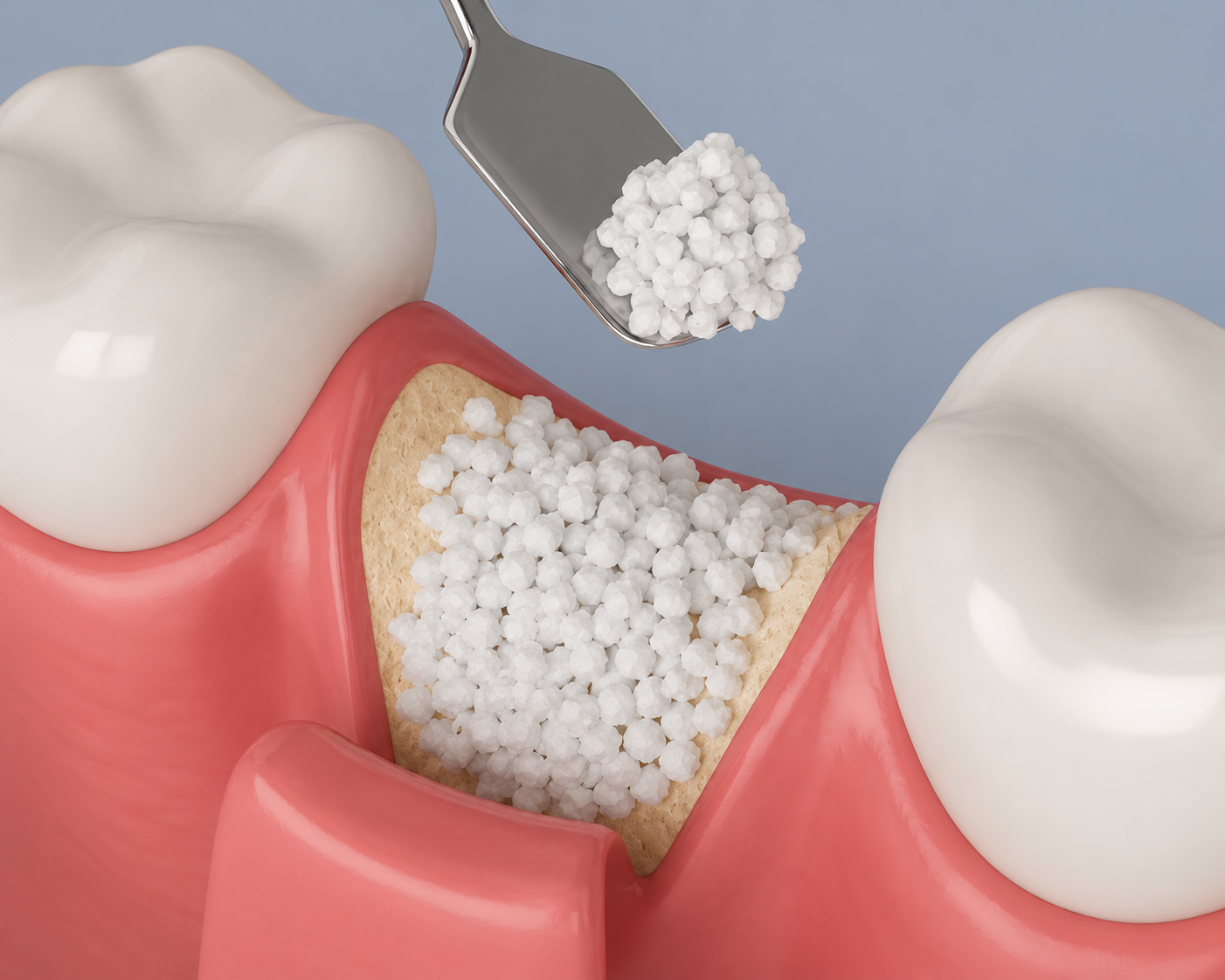
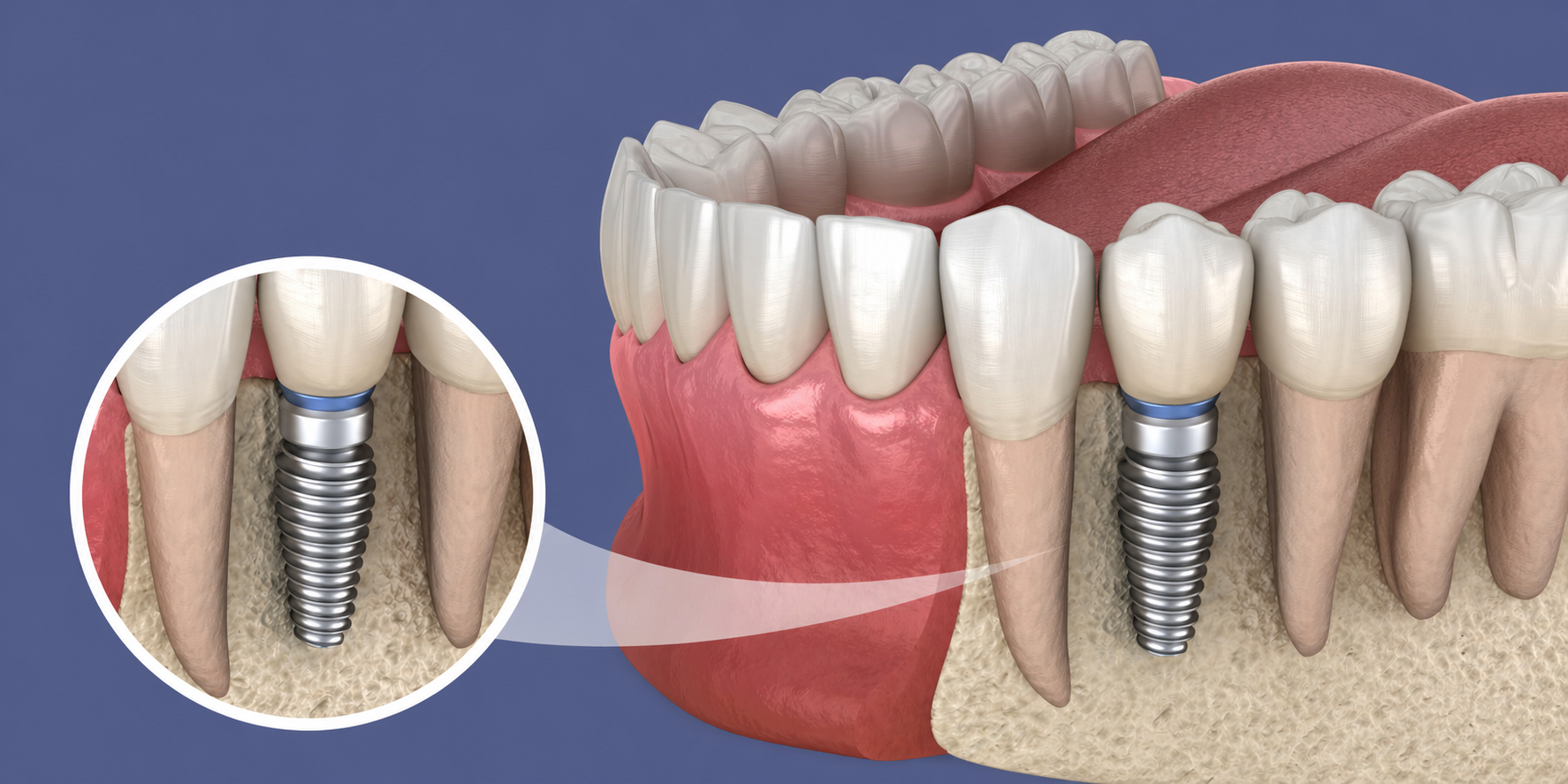
Bone grafting is a procedure that adds material to your jaw to rebuild bone that has been lost or has shrunk over time. It is usually for people who want a dental implant but do not have enough bone to hold one, or for those who have lost bone after a tooth was pulled, after gum disease, or from wearing a denture for many years.
At Penn Family Dental in DuBois, your dentist starts by looking at your jaw and taking images to see how much bone you have. During the appointment, the area is numbed, the graft material is placed where bone is missing, and the site is closed so it can heal. A single-site graft often takes under an hour, though the exact time depends on how much bone needs rebuilding. Over the following months, your own bone usually grows into the graft and makes the area strong enough for the next step.
The main reason people choose a bone graft is to make an implant possible. An implant needs solid bone to anchor into, and when that bone is thin or missing, a graft rebuilds the base first. This opens the door to a tooth replacement that would not work otherwise.
A graft can also help protect the shape of your face and jaw. When bone is lost, the area can sink in and nearby teeth can start to shift. Adding bone back helps hold the structure and keeps things more stable for the long run.
Recovery is usually manageable. For the first few days you may notice swelling and some soreness, which many patients handle with over the counter pain relievers and ice. You will want to stick to soft foods, avoid poking the area with your tongue, and keep it clean as directed. Most people get back to normal activity within a few days, and Dr. Minaya will give you clear instructions and check that the site is healing the way it should.
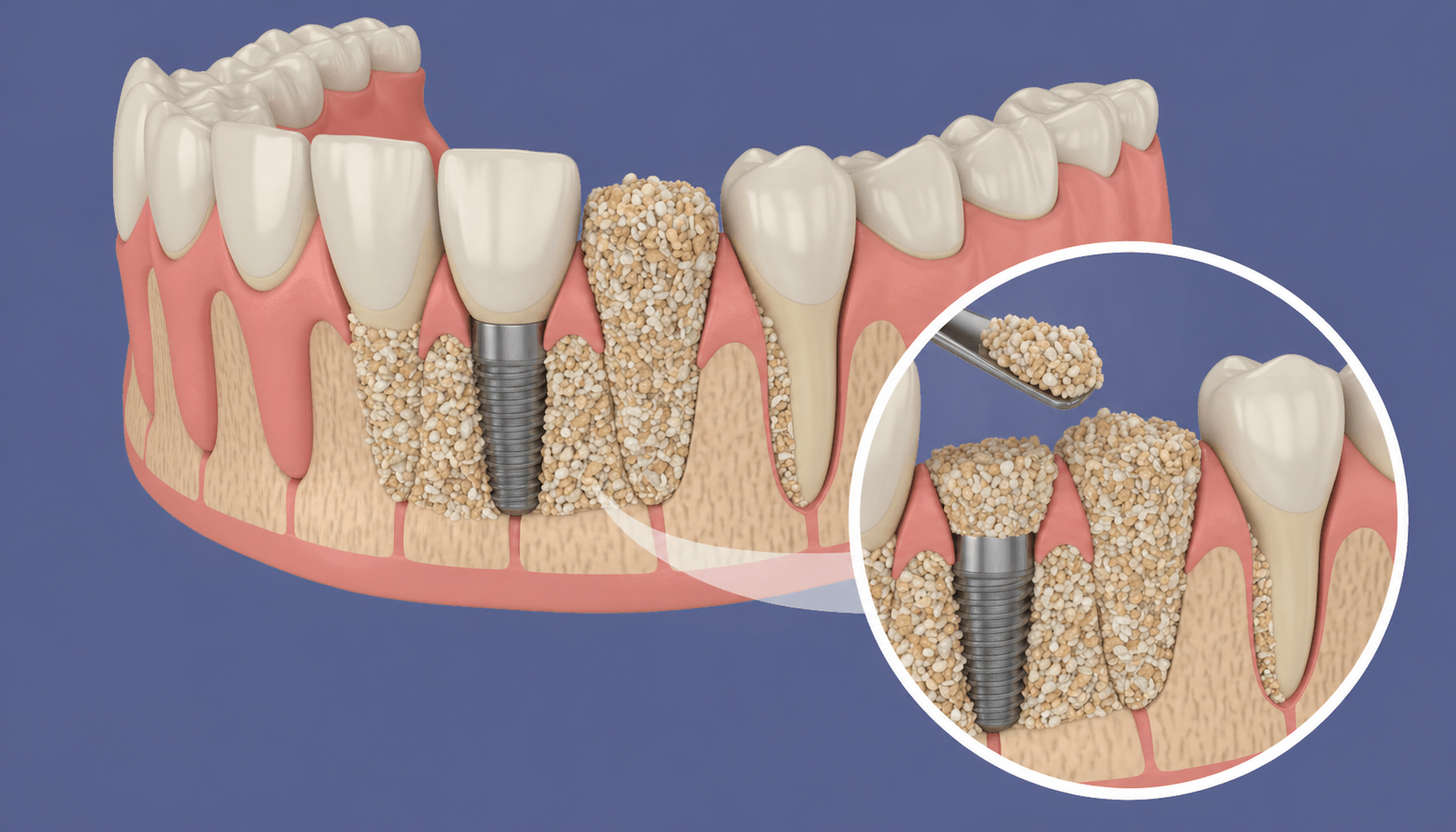
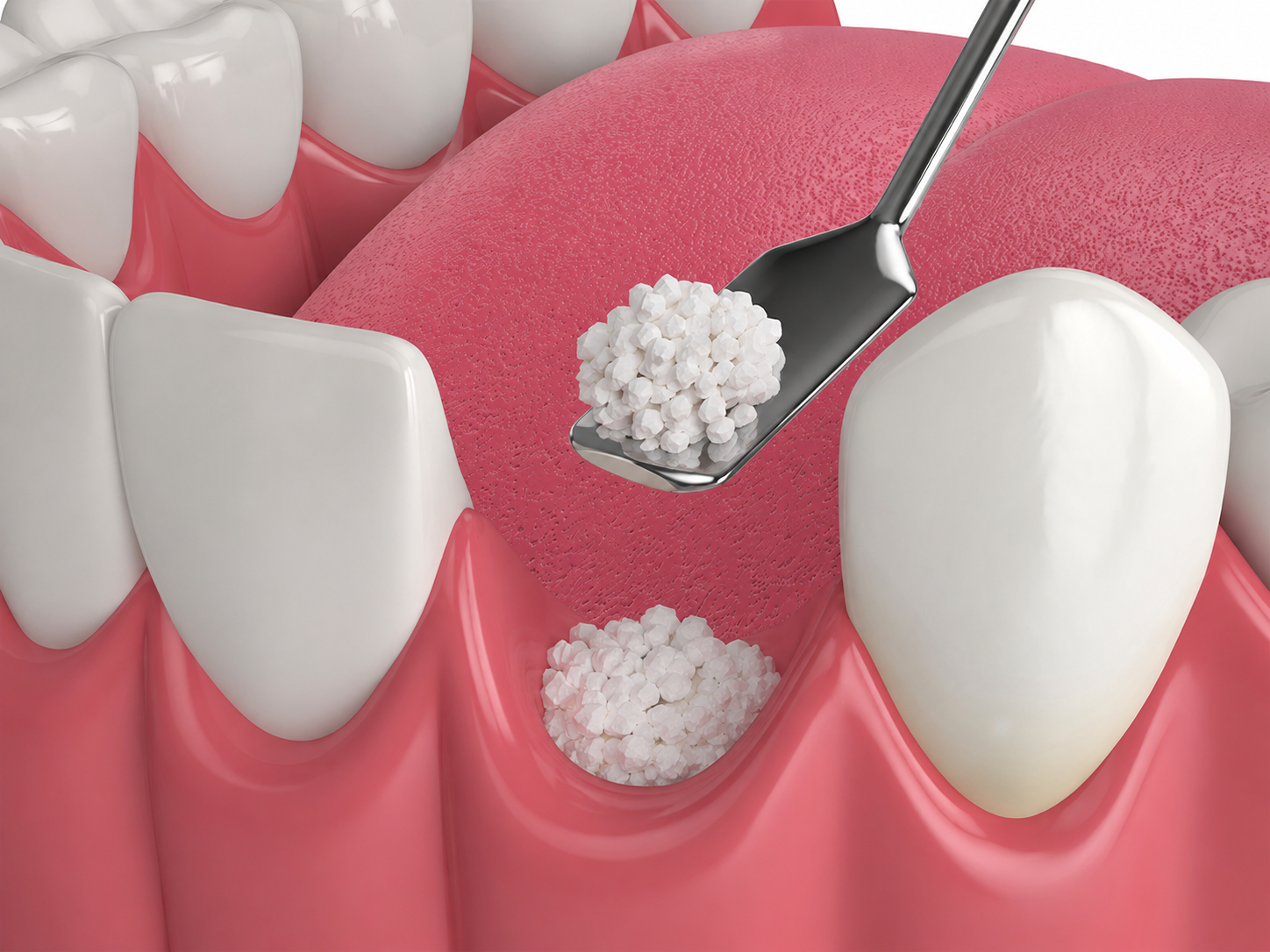
One common situation is after a tooth is removed. Once a tooth is gone, the bone that held it can begin to shrink. Placing a graft at the time of the extraction, or soon after, helps keep enough bone so an implant can be placed later.
Another reason is gum disease that has eaten away at the bone around your teeth. If you have been told you have bone loss, a graft may help rebuild some of what was lost and give nearby teeth better support. Your dentist will check whether your gums are healthy enough before moving ahead.
Long time denture wearers often lose bone in the ridge where the denture sits, which can make the denture feel loose. A graft may help in some of these cases. Keep in mind that bone grafting is a preparation step, not a tooth replacement by itself. If your main concern is simply replacing a missing tooth and you already have enough bone, you may be better served by going straight to an implant without a graft.